

Alternative minimum tax (“AMT”) is a hard proposition for many tech employees. When you exercise incentive stock options it increases your net worth, but you don’t actually get any cash. This puts you in a tough spot for paying any AMT later on. This is an important topic for start-up tech employees with a stock option plan and it is easy to miss.
Incentive stock options (“ISOs”) are qualified stock options available under a company stock option plan. They must be held one year from the date of exercise and two years from the date of grant. Otherwise, they are considered non-qualified stock options (“NQSOs”). ISOs receive favorable long-term capital gain tax rates upon sale instead of ordinary income rates. However, in the year you exercise ISOs, you may be subject to the the alternative minimum tax.
A basic discussion of what happens when you exercise an ISO can be found at How to Report Stock Options on Your Tax Return
At year end, your company will report your ISO exercise on IRS Form 3921, per the stock option plan requirements. The IRS and you will receive a copy shortly after year end. This form will help you and your accountant complete the AMT calculation for your annual tax return.
What is AMT?
AMT is an alternative tax system that takes your regular taxable income from Form 1040 and makes adjustments for special items. ISOs are one of those adjustments. The adjustment amount is calculated as the difference between the value and exercise price at the time of exercise.
Other adjustments generally include state and local taxes paid, real estate taxes, interest on home equity loans, etc. This is a complex calculation and we are discussing a high level view in this post.
This generally results in a higher alternative minimum taxable income (“AMT income”) that is subject to either a 26% or 28% tax in the year of ISO exercise.
When you sell your ISO shares, this will decrease your AMT income for the year of sale and reduce your AMT liability below regular tax. As a result, the AMT credit produced from the exercise can then be used to recapture a portion of the AMT you previously paid.
When does AMT apply?
The AMT income exemption amount for married filing joint at $133,300 or single at $85,700 (for 2024). This begins to phase-out for higher earning households at $1,218,700+ joint or $609,350+ for single.
AMT is generally applied to AMT income at a 26% to 28% tax rate. The tax bracket raises at $206,100 for both married filing jointly and single taxpayers.
Confused yet? This is why tax accountants and experienced advisors are so important for tech employees!
How do I minimize AMT?
A few ways include:
- Determine the number of ISOs you can exercise without generating additional AMT liability. This ‘AMT cushion’ amount utilizes the difference between regular tax and calculated AMT tax. If a cushion exists, consider exercising ISOs toward the end of the year when you have a better estimate of taxable income.
- Exercise ISOs and sell qualified ISOs in the same calendar year. This ‘ladder’ approach works with ISO exercises over a few years and may significantly reduce the overall AMT you pay over time.
- Exercise ISOs and exercise NQSOs in the same calendar year. This will increase taxable income and AMT income at the same time and may reduce the difference under these two tax systems.
- Use a prior year AMT credit. An AMT credit is a little convoluted in calculating. In general, this is a credit for the difference between regular tax and alternative minimum tax in the year AMT is paid. When your regular tax liability is higher than your AMT tax liability, you may use a prior AMT credit against your regular tax liability.
If you work for a public tech company and already exercised ISOs at the beginning of the year, look at the prices again. You may be able to do something similar to ‘exercise ISOs and exercise NQSOs’ by selling those earlier 2024 exercises and disqualifying them. When you disqualify an exercised ISO, the stock sale becomes compensation income similar to NQSOs and may open the door for exercising and holding way more shares. Of course, this also depends on your risk level and what you can personally do based on the market environment and your own emergency needs.
Where are you in your start-up adventure?
- Looking for more information on how to negotiate your next compensation package?
- Evaluating your current company offers?
- Or did you just receive your stock option grant?
- If you were recently terminated, review what to do with stock here.
Did you enjoy this post? Sign Up for my newsletter so you won’t miss another article.
The above discussion is for informational purposes only. Recommendations are of a general nature, not based on knowledge of any individual’s specific needs or circumstances, and there is no intent to provide individual investment advisory, supervisory or management services.
If you live in a state with its own form of state AMT, this further complicates the matter. AMT calculations can be difficult and you may need professional help, such as that of an accountant, tax attorney, or someone experienced in complex tax returns. If you live in a state with its own form of state AMT, this further complicates the matter. AMT calculations can be difficult and you may need professional help, such as that of an accountant, tax attorney, or someone experienced in complex tax returns.

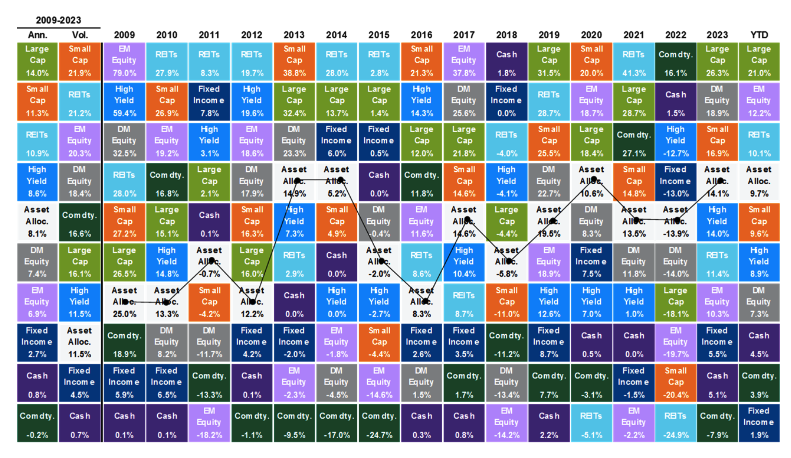 JP Morgan returns from JP Morgan Quarterly Market Review, Q3 2024